.svg)
Heat pumps, planning and councils: A practical guide built together
The UK needs to scale heat pump installations dramatically over the next decade, from around 60,000 a year today to 1.5 million annually by 2035. The challenge is significant, particularly given that heat pumps can reduce household heating emissions by around 80%.
.avif)
.svg)


When the boiler breaks, nobody waits eight weeks
The UK needs to scale heat pump installations dramatically over the next decade, from around 60,000 a year today to 1.5 million annually by 2035. The challenge is significant, particularly given that heat pumps can reduce household heating emissions by around 80%. UK100 and our 120+ members are committed to doing what we can to lead and facilitate this important transition.
In many cases, installing a heat pump is relatively straightforward. Most domestic installations fall within permitted development rights, meaning they do not require planning permission if they meet certain criteria, including noise thresholds.
But where planning permission is required, the process can become significantly longer and more uncertain. A standard planning application can add around £347 in fees and up to eight weeks to the timeline. Where a full BS4142 noise assessment is needed, this can add a further £1,500 and up to another two months.
And that matters because heating decisions are rarely made slowly. When a boiler fails, homeowners, landlords and their tenants are often looking for the quickest route back to a warm home. Delays, uncertainty and additional costs can make low-carbon options feel harder to navigate.
The diagram below illustrates how the pathway for a heat pump installation can become significantly more complex where planning permission and additional noise assessments are required.
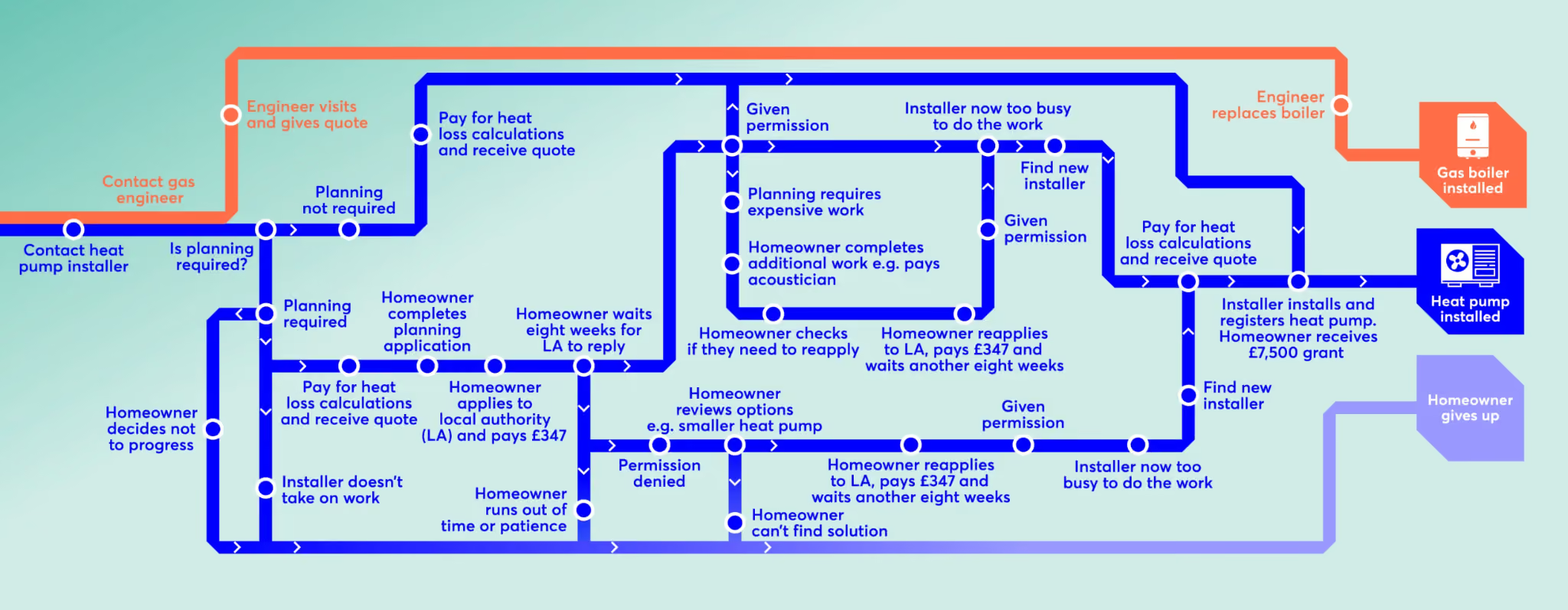
Source: Nesta
Working with local authorities to understand the barriers
We teamed up with Octopus Energy for a dedicated piece of work with our members to better understand the planning and regulatory barriers affecting domestic heat pump deployment and, importantly, to explore practical solutions together. Over three months, we convened a task and finish group bringing together planners, elected members, Environmental Health officers, sustainability leads and retrofit specialists from councils across the UK.
The sessions focused on three areas: understanding the main barriers to deployment; exploring how planning, noise assessments and internal council workflows operate in practice; and co-developing practical solutions and examples of best practice.
What emerged was a picture of a system where multiple small friction points can combine to slow down otherwise viable installations.
Planning is only one part of the challenge
While planning and regulation featured prominently in discussions, councils consistently described the barriers as interconnected rather than isolated.
Many residents are still uncertain about whether a heat pump will work in their home, particularly in older properties or during colder weather. Councils also highlighted the important role trusted heating engineers play in household decisions, alongside wider challenges around installer capacity, skills shortages, affordability and funding complexity. At the same time, councils are balancing these issues alongside wider pressures on capacity and resources.
Small process changes could make a significant difference
Heat pump applications often require input from both planning and Environmental Health teams, particularly in cases where noise considerations become more complex including management of cumulative noise impacts as deployment increases, especially in dense urban areas.
Discussions further highlighted that noise is rarely a simple pass-or-fail issue. In many cases, relatively small adjustments to siting, orientation or design can help an application progress successfully.
A key theme throughout the sessions was that local and combined authorities are often looking for practical, low-resource changes rather than large-scale structural reform. Several solutions emerged during the discussions.
Clearer guidance and validation checklists
Many delays begin at the validation stage, with missing specifications, incomplete noise calculations or unclear site information leading to further information requests. Councils highlighted the value of simple, plain-English guidance for both residents and installers, alongside clearer validation checklists that explain exactly what is required upfront.
Stronger coordination between teams
Several councils suggested that clearer protocols between planning and Environmental Health teams, alongside regular cross-team meetings and shared guidance, could help create more predictable outcomes and reduce unnecessary delays.
Better use of standardised approaches
Councils also discussed the benefits of standard planning conditions, shared templates and common approaches to interpreting noise evidence.
Some areas are already developing plain-English noise explainers and standard conditions linked to recognised installation standards such as MCS guidance. In Greater Manchester, GMCA played a convening role in bringing together local authorities and Octopus Energy to review cases across ten councils, identify inconsistencies and support the development of a standard planning condition for heat pump installations.
Others highlighted the potential for Local Development Orders in areas with similar housing types, allowing councils to streamline approvals for certain categories of installation.
Moving from friction to confidence
One of the clearest conclusions from the task and finish group was that many of the barriers affecting heat pump deployment are solvable.
Discussions focused on how processes originally designed for relatively small numbers of applications can adapt as deployment grows. The challenge now is making the pathway more predictable for residents, installers and councils alike.
Because when households are making time-sensitive heating decisions, simplicity, clarity and confidence matter just as much as policy ambition.
___________________________________
The Government is likely to consult on further changes to the planning regime and we saw in the Warm Homes further investment and support for heat pumps and other low carbon technologies. In the meantime, local and strategic authorities can take action now.
Our detailed guide is available here and you can also rewatch our launch webinar, which included contributions from NESTA, Greater Manchester Combined Authority and Octopus.
If you want to know more about this work, or want to collaborate on something similar, get in touch via info@uk100.org.
.png)