.svg)
How councils can turn home energy advice into practical climate action
Bioregional partnered with South Cambridgeshire District Council and partners across Cambridgeshire and Peterborough to create the Home Energy Upgrade Guide. Not every council needs a guide, but it offers useful lessons in how to offer accessible, trusted advice on retrofit and energy to residents.
.svg)


If local authorities are serious about cutting emissions and helping residents through the net-zero transition, home energy upgrades need to be at the heart of local climate action. They need to become part of how councils help people live well in their homes.
Across the UK, residents are facing a difficult combination of high energy costs, cold or uncomfortable homes, uncertainty about new heating technologies and confusion about where to start. Many want to act, but do not know which improvements are right for their home, who to trust, what support is available, or whether they need to do everything at once.
That is where councils can play a powerful role. They may not be able to fund every home upgrade directly, but they can make the route clearer, fairer and more locally relevant.
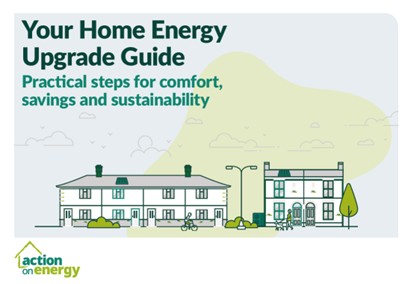
Bioregional’s work with South Cambridgeshire District Council and partners across Cambridgeshire and Peterborough offers one practical example of what this can look like. The Home Energy Upgrade Guide, developed in 2026, brings together housing typologies, mapping data and upgrade pathways covering the most common home types across Cambridgeshire and Peterborough, helping residents understand what improvements may be suitable for their property and when to make them. The wider lesson is not that every council needs to produce a guide. It is that trusted, locally relevant advice can help turn climate ambitions into action at household level.
Why home energy upgrades matter to residents and to councils
For households, the benefits of home energy improvements are immediate and personal. Better insulation, draught-proofing, ventilation, heating controls, solar panels or low-carbon heating can make homes warmer in winter, cooler in summer, cheaper to run and healthier to live in. For residents worried about rising bills or energy insecurity, even small steps can reduce pressure and build confidence. For those planning bigger works, clear advice can help them sequence improvements sensibly and avoid expensive mistakes.
For councils, supporting home energy improvements is also one of the most practical ways of delivering climate commitments. Homes remain a major source of carbon emissions, and many still rely on fossil fuel heating. Helping residents reduce energy demand and move towards cleaner heat is therefore not an add-on to local climate action, it is central to it. The challenge is turning that ambition into something residents can actually use.
Start with the homes people actually live in
The Cambridgeshire and Peterborough guide does this by starting from people’s homes, not from abstract technology choices. Residents can identify common local house types, such as terraced, semi-detached, detached homes and bungalows, and explore practical options ranging from quick wins to more substantial upgrades. The guide also recognises that not every household is ready for the same level of intervention, and it includes interactive maps to help residents understand their own opportunities. Some homes may be closer to clean heat readiness. Others may need staged improvements to fabric, ventilation or heating systems before larger changes make sense.
Every home has a pathway
That staged approach matters. If councils frame retrofit only as a deep, costly, once-in-a-generation project, many residents will disengage before they begin. A more useful message is that every home has a pathway. Some actions are low cost. Some are best timed with renovations, repairs or boiler replacement. Some need professional advice. The role of local guidance is to help residents understand the next sensible step.
Local knowledge is crucial
The project also shows why local knowledge matters. The guide draws on regional housing typologies, public data and mapping to make recommendations feel relevant to Cambridgeshire and Peterborough, rather than generic to the UK as a whole. It also links residents to local support, grants and trusted sources of further advice, including Action on Energy Cambridgeshire. This is the kind of connective role councils are well placed to play: bringing together national guidance, local housing knowledge, trusted partnerships and resident-facing support.
Turning household decisions into area-wide planning
The guide also proved useful internally, not just as resident-facing material. When residents can understand what their home may need, councils can also begin to see the wider pattern: which house types are likely to need deeper support, where clean heat may be easier to deploy, where advice campaigns should be targeted, and how household decisions connect to area-wide carbon and energy planning.
More than just a guide
For UK100 members, the lesson is not that every council needs a guide. It is that residents need trusted, practical information to help them act. Whether through online tools, advice services or local campaigns, supporting households to make informed retrofit decisions remains a critical part of delivering local climate and energy objectives.
A model other councils can adapt
If you are a local authority looking to accelerate home energy upgrades, reduce emissions and support residents through the net-zero transition, the lessons from Cambridgeshire and Peterborough provide a practical model that can be adapted locally. Start with the homes people live in. Make the advice specific enough to be useful. Be honest about costs, disruption and sequencing. Connect residents with trusted support. And treat home energy guidance not as a communications product, but as part of the infrastructure for fair, place-based climate action.
The outcome is about more than providing information. It is warmer homes, lower bills, improved health, stronger energy resilience and less reliance on fossil fuels. Done well, home energy upgrades can help councils show that climate action is not remote from people’s lives, but rooted in the comfort, security and affordability of the places they call home.
Find out more
The Home Energy Upgrade Guide can be viewed here: Your Home Energy Upgrade Guide.
Every area is different, but the principles are transferable. If you're interested in how locally tailored advice can support climate delivery, resident engagement and home decarbonisation, we'd be happy to share our experience and lessons learned.
Get in touch with the Bioregional team to continue the conversation here: https://www.bioregional.com/projects-and-services/built-environment-consultancy/contact-us or contact us: lewis.knight@bioregional.com / jo.mortensen@bioregional.com
.png)


.avif)


